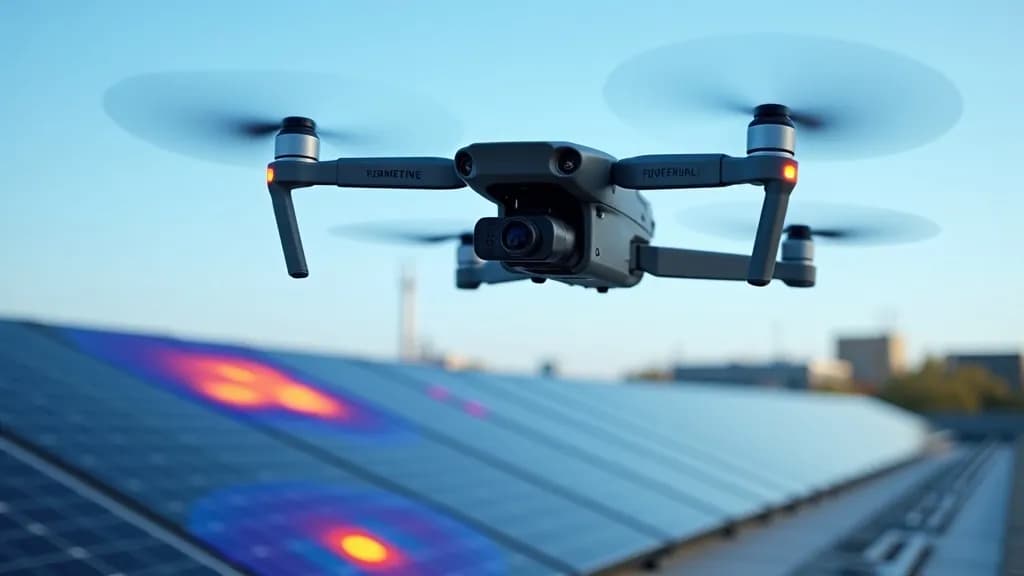
PV Inspection by Drone in Austria
Thermographic PV inspection in Carinthia, Styria and all of Austria — no scaffolding, no roof access required. Detailed report within 5 business days, from EUR 240 gross.
At a glance
Skyservice performs PV inspection by drone in Carinthia, Styria and all of Austria. We detect hotspots, bypass-diode defects, micro-cracks, snail trails and PID damage using high-resolution thermography. Our inspection methodology follows the IEC 62446-3 approach. You receive a detailed report within 5 business days — from EUR 240 gross, accepted for warranty, insurance and expert-witness cases.
What Is a PV Inspection by Drone?
A PV inspection by drone is the thermographic examination of your photovoltaic system from the air. Defective or underperforming PV modules are invisible to the naked eye — hotspots, micro-cracks, defective bypass diodes, snail trails and PID effects reduce your system's yield, often unnoticed for years. A single defective string can already mean 5–10% yield loss.
Our drone-assisted PV inspection reliably uncovers these problems. Our high-resolution thermal camera (640×512 pixels, ±2°C accuracy) captures the temperature of each individual module and makes even the smallest anomaly visible. Our inspection methodology follows the requirements of IEC 62446-3 and delivers reproducible, technically robust results — accepted by expert witnesses, insurers and module manufacturers.
How Thermographic PV Inspection Works
Every PV module generates electricity from sunlight. Defective or shaded cells, however, cannot convert this current — the excess energy is instead converted to heat. This temperature rise is the key signal: a functioning cell stays close to module temperature, while a defective cell heats up by several degrees.
Our PV inspection takes place under defined measurement conditions: at least 600 W/m² irradiance, low wind speed, modules at operating temperature. The drone flies a systematic pattern over your system and captures a thermal image of every module. Our software analyses the images automatically and compares them with the expected temperature pattern — deviations are marked, classified and documented in the report.
Which Faults Does a PV Inspection Detect?
Our thermographic analysis identifies all common failure modes in photovoltaic systems:
Hotspots
Localised overheating of individual cells due to soiling, micro-cracks or material defects. Typical signature: point temperature rise of 10–40°C above module temperature.
Defective Bypass Diodes
When a bypass diode fails, an entire sub-string becomes thermally active. Visible as evenly warmed cell rows (one third of the module). Typical consequence: 30% yield loss per module.
Micro-Cracks
Hairline cracks in silicon cells caused by transport, installation or mechanical stress. Thermographically visible as asymmetric warming — often a precursor of later failures.
Snail Trails
Dark, snail-like lines on the module surface caused by silver corrosion. Indicate underlying micro-cracks and correlate with increased hotspot probability.
PID Damage
Potential-induced degradation caused by high voltage between module frame and cells. Typical for older installations, visible as uniform power reduction across entire module rows.
Cell and String Failures
Completely failed cells, broken solder joints and defective strings. These faults are electrically measurable, but thermography locates them faster and without shutting the system down.
Inspection Process
From first enquiry to final report in under 10 business days.
Enquiry & Scheduling
You send us your system data (size, location, year of installation). We check the weather forecast and propose an inspection date with suitable irradiance conditions.
On-Site Inspection
Our certified pilot flies your system in a systematic grid pattern. Flight time: approx. 30–90 minutes depending on size. No shutdown, no interference with system operation.
Analysis & Findings
Back at the office we evaluate the thermography data: every anomaly is geo-referenced, classified and paired with a recommendation — matching the IEC 62446-3 fault categories.
Report & Debrief
You receive the PDF report within 5 business days. On request, we discuss the findings in a free 15-minute call together with your electrician or expert witness.
What's in the Inspection Report?
Professional documentation — directly usable for warranty, insurance and expert-witness purposes.
- Executive summary with overall assessment and estimated yield loss in percent
- Orthophoto of the system with marked findings (GPS-referenced)
- Thermographic close-up of every affected module with temperature scale
- Fault classification per IEC 62446-3 methodology (category 1–3)
- Action recommendation per finding (cleaning, replacement, further diagnostics)
- Appendix: flight data, irradiance, module temperature, wind conditions
PV Inspection Pricing
Transparent and fair — no hidden fees.
Small Systems (up to 30 kWp)
Gross, incl. travel within Carinthia & Styria. Ideal for private households and smaller rooftop systems. Report in 5 business days.
Commercial Systems (30–300 kWp)
Gross, incl. detailed string-level analysis. Suitable for farms, commercial operations and apartment complexes.
Large Systems & Solar Farms (> 300 kWp)
Custom quote for solar parks, ground-mounted installations and multi-site inspections. Volume discount from 1 MWp.
All prices include 20% VAT and travel within Carinthia and Styria. Other federal states on request.
Aligned with IEC 62446-3
Our PV inspection follows the international standard IEC 62446-3 for thermographic testing of photovoltaic modules. We work under the measurement conditions defined there (irradiance, temperature, wind) and classify findings per the normative fault categories. This delivers reproducible and technically robust results — accepted for warranty, insurance and expert-witness cases. Note: we are not a certified testing body; we align our methodology with the standard but do not perform accredited conformity testing.
Benefits of PV Inspection by Drone
All Failure Modes at a Glance
Hotspots, bypass-diode defects, micro-cracks, snail trails and PID damage — reliably detected in a single inspection.
IEC 62446-3 Methodology
Our inspection methodology follows the international standard for thermographic PV testing. Reproducible, technically robust results.
Report in 5 Business Days
Professional PDF report with thermal images, fault classification and action recommendation — directly usable for warranty, insurance and expert-witness cases.
No System Shutdown
The drone inspects your system during normal operation. No production losses, no roof access, no scaffolding.
PV Inspection for Every Type of System
Every system type has its own failure modes and challenges. We adapt our inspection methodology accordingly.
Frequently Asked Questions About PV Inspection
We operate across Carinthia, Styria and other parts of Austria. Our headquarters in Friesach enable short travel times throughout the region.
Carinthia
Klagenfurt · Villach · Friesach · St. Veit · Wolfsberg · Spittal an der Drau · Feldkirchen
Styria
Graz · Leoben · Bruck an der Mur · Kapfenberg · Leibnitz · Weiz · Deutschlandsberg
Other Regions
Salzburg · Upper Austria · Lower Austria · Burgenland — on request
PV Inspection by Drone · PV Inspection Carinthia · PV Inspection Styria · PV Thermography · Drone Inspection Klagenfurt · PV Thermography Graz · Solar System Inspection Austria · PV System Testing · IEC 62446-3 Thermography
Other Services
Discover our full range of professional drone services.
Request PV Inspection Now
Free quote — response within 24 hours. Report in 5 business days.